Thinning Hair in Women: The Truth About Causes and What Actually Helps


In this story ·

By Afsennah, Certified Advanced Trichologist · New version: November 16, 2026 · First published: November 2, 2025
It starts small. Your ponytail feels a little lighter. Your part looks a little wider in the bathroom light. You catch yourself checking photos from two years ago, just to compare.
If that's you, I know that feeling, because I've been there myself. Thinning hair in women is far more common than people talk about, and the good news is that there's almost always a reason. Find the reason, and you can finally stop guessing. Let's do that together.
Key Takeaways
- ✓Thinning hair in women has different causes: genetics and hormones, shedding after stress or illness, deficiencies, thyroid, PCOS, tight styles and scalp conditions.
- ✓The cause decides the treatment, so step one is always finding yours.
- ✓Sudden all-over shedding and slow, gradual thinning are two different stories.
- ✓Blood tests with your doctor can rule out iron, thyroid and vitamin D problems.
- ✓A scalp treatment matched to your type of hair loss, used consistently for 3 to 6 months, is where real change starts.
The short answer
Thinning hair in women is most often caused by female pattern hair loss (genetics and hormones), shedding after stress, illness or pregnancy, low iron or thyroid problems, PCOS, or tight hairstyles. To stop hair thinning, find your cause first, then treat your scalp with a routine matched to that cause.
What Thinning Hair Looks Like in Women

Women rarely go bald like men do. Thinning usually shows up in quieter ways:
- A wider part, especially on top of your head.
- More scalp showing in bright light or in photos.
- A thinner ponytail that wraps around the elastic one more time.
- Thinner temples or hairline.
- More hair than usual in the shower, your brush or on your pillow.
Two patterns matter most. Shedding is when a lot of hair falls out at once, often a few months after a trigger. Thinning is when your hair slowly gets finer and less dense over time. They can happen together, but they have different causes.
Why Is My Hair Thinning? The Most Common Causes
Female Pattern Hair Loss (Androgenetic Alopecia)
The most common cause of slow, gradual thinning in women. Your follicles are sensitive to hormones (androgens like DHT), and over time they shrink and grow finer, shorter hairs. It runs in families and often shows up first as a wider part. It can be managed and slowed, but it can't be cured, so consistency is everything.
Shedding After a Trigger (Telogen Effluvium)
Stress, illness, high fever, surgery, crash dieting or giving birth can push many hairs into their resting phase at once. About two to three months later, they fall out together. This usually settles once the trigger is gone.
Read nextPostpartum Hair Loss: When It Starts, When It Stops and What Helps →
Low Iron, Thyroid Problems or Low Vitamin D
Your hair is not essential to survival, so when your body is short on something, your hair is one of the first places it shows. Low iron stores, an underactive or overactive thyroid and low vitamin D can all play a role.
Hormonal Conditions Like PCOS
PCOS can mean higher androgen levels, which can thin the hair on your head (while sometimes increasing hair elsewhere).
Tight Hairstyles and Extensions
Constant pulling from tight ponytails, braids or extensions can thin the hairline and temples. This is called traction alopecia, and catching it early matters.
Scalp Conditions
A scalp that's inflamed, very flaky or itchy (seborrheic dermatitis, psoriasis, eczema) isn't a happy place for hair to grow.
Breakage That Looks Like Thinning
Sometimes hair isn't falling out at the root at all, it's snapping along the length. That makes your ends look thin and see-through, and that's a lengths problem, not a scalp problem.
Read nextWhy Are My Ends So Dry? →
How to Find Your Cause
- Check the hairs you lose. A hair with a small white bulb at the root fell out from the root (shedding). A hair without a bulb, often short, probably broke.
- Think back three months. Illness, a baby, big stress, a new diet or medication? That points to shedding.
- Look at the pattern. A widening part that slowly gets worse points to female pattern hair loss. Patches point to something else and need a doctor.
- Ask your doctor for blood tests, such as iron stores (ferritin), thyroid and vitamin D.

Trichologist tip
I've lived this. I've dealt with androgenetic alopecia, alopecia areata and scalp eczema since I was young, and I tried so many products that were never made for my cause. That's exactly why I believe the cause decides the treatment, and why I analyze every consultation myself.
How to Stop Hair Thinning: What Actually Helps
1Treat the Cause First
Low iron, a thyroid problem or PCOS needs your doctor. No hair product can fix what's happening inside your body, so start there if your blood tests show something.
2Use a Scalp Treatment Matched to Your Type of Hair Loss
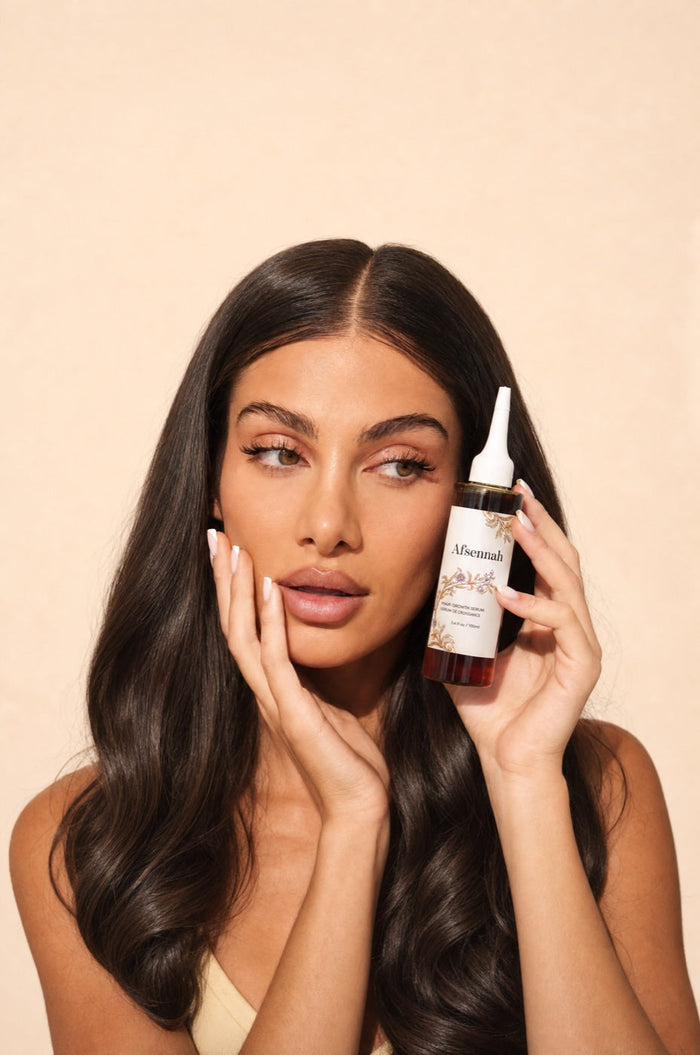
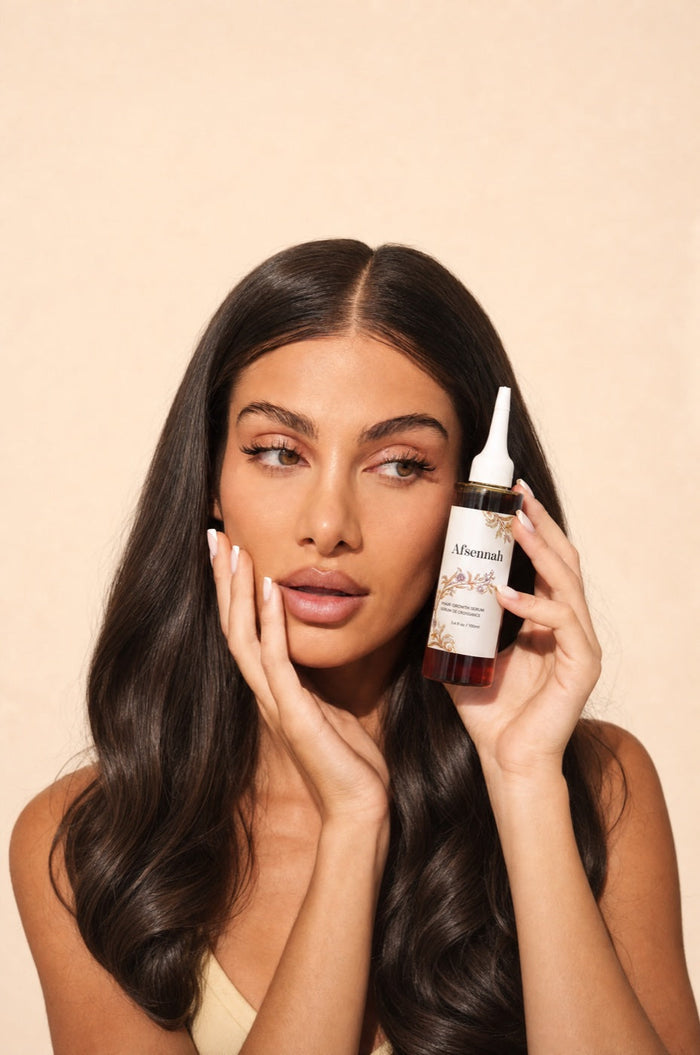
Different causes need different ingredients. Female pattern hair loss needs DHT-blocking support. Stress shedding needs calming, stress-relieving support for the scalp. My Custom Hair Growth Treatment is blended to your type of hair loss after your consultation and applied to your scalp at least 4 hours before washing, or overnight, 2 to 3 times a week.

Afsennah pick
Custom Hair Growth Treatment
Pre-wash scalp treatment for shedding, thinning and scalp balance.
Shop now3Activate Your Follicles With Deep Oiling
Massage your scalp for a few minutes a day, and start deep oiling, my favorite treatment: scalp treatment on your scalp, hair oil on your lengths. Once or twice a week, use the Microneedle Scalp Roller first so your treatment absorbs better.

Read nextHow to Use a Scalp Roller for Hair Growth →
4Keep Your Scalp Clean and Calm
A healthy scalp is the ground your hair grows in. Wash as often as your scalp needs. Put some shampoo in your hand with a little water and emulsify it, so it spreads better on your scalp while you massage it in. A Custom Shampoo made for your scalp type (condition) keeps it balanced.

Afsennah pick
Custom Shampoo
Made for your scalp type. Free from sulfates, parabens, silicones and alcohols.
Shop now5Protect the Hair You Have
Fewer hairs means every hair counts. Loosen your hairstyles, swap tight elastics for silk scrunchies, lower the heat, and protect your lengths with a pre-wash Custom Hair Care Treatment so they don't snap.
6Eat for Your Hair
Enough protein, iron-rich foods and a balanced diet give your follicles what they need. Crash diets are one of the most common shedding triggers I see in consultations.
7Give It Time
Hair grows slowly. Most people notice first improvements after 8 to 12 weeks, with more visible results after 3 to 6 months of consistent use. Take a photo of your part in the same light every month so you can see real progress.
When to See a Doctor
Please see your doctor or dermatologist if:
- Your hair is falling out suddenly or in clumps.
- You have round bald patches.
- Your scalp is red, scaly, painful or itchy.
- Thinning comes with irregular periods, acne, extra facial hair, tiredness or weight changes.
- Nothing has improved after 6 months of consistent care.
Your doctor can test for deficiencies and hormonal causes and talk you through medical options. Mention their findings in your consultation so your formula fits.
The Best Afsennah Products for Thinning Hair
Custom Hair Growth Treatment
A pre-wash scalp treatment blended to your type of hair loss, for example with DHT blockers for female pattern hair loss.
Shop now

Frequently Asked Questions
Can thinning hair grow back?
Often, yes, especially when it's caused by shedding, deficiencies or tight styles and the cause is treated. With female pattern hair loss the goal is to slow it down and support regrowth, because it can't be cured.
How do I stop my hair from thinning?
Find your cause first, with your doctor's help if needed. Then use a scalp treatment matched to that cause, be gentle with your hair, and stay consistent for at least 3 to 6 months.
Is thinning hair in women normal with age?
Hair can get a little finer with age, especially around menopause. But noticeable thinning at any age is worth looking into.
What's the difference between shedding and thinning?
Shedding is a lot of hair falling out at once after a trigger. Thinning is your hair slowly getting finer and less dense. They have different causes and need different care.
Can stress cause thinning hair?
Yes. Big stress can trigger shedding about two to three months later. It usually settles once the stress does.
“The cause decides the treatment.”
Afsennah, Certified Advanced Trichologist
The Takeaway
Thinning hair isn't a mystery you have to live with. There's a cause, and once you know it, you know what to do. Start with your doctor if something feels off, treat your scalp for your type of hair loss, protect your lengths, and give it time.
Ready to stop guessing? The Custom Hair Growth Treatment is blended to your type of hair loss after your consultation, because the cause decides the treatment. It comes with my 180-day guarantee.
Lots of love,
Afsennah
And don't forget to follow me for more hair tips
More From Afsennah
About the author
Afsennah, Certified Advanced Trichologist
Afsennah is a Certified Advanced Trichologist and the founder of Afsennah, a custom haircare brand. After dealing with androgenetic alopecia, alopecia areata and scalp eczema from a young age, she began studying the scalp and ingredients to understand her own hair. Read her story.
This article is for general education and does not replace medical advice.