What's My Hair Type? How to Find Your Hair Type and Texture (Without Guessing)
In this story ·
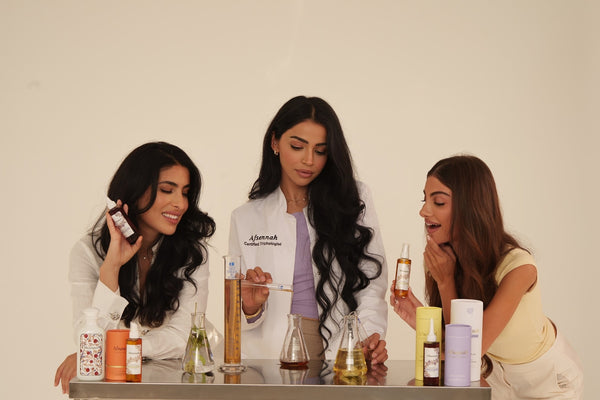
By Afsennah, Certified Advanced Trichologist · New version: November 15, 2026 · First published: January 10, 2025
"Is my hair 2C or 3A?" If you've ever stood in front of the mirror comparing one curl to a chart online, welcome. You're in very good company.
Here's the thing nobody tells you: what most people call your "hair type" is only one piece of the puzzle. Two people with the exact same curls can need completely different routines. That's why in my consultation I don't ask for one hair type. I ask for five things about your hair, plus your scalp type (condition). Let's find all of yours, with simple checks you can do at home, so you finally know what your hair is asking for.
Key Takeaways
- ✓Natural hair structure (what most people call hair type) is the shape of your hair: straight, wavy, curly or coily.
- ✓Natural hair texture is how thick each single strand is: fine, medium or coarse.
- ✓Hair porosity is how well your hair absorbs and holds on to moisture: low, medium or high.
- ✓Hair elasticity is how your hair stretches and returns: low, medium or high.
- ✓Hair density is how many hairs grow per square inch of your scalp: low, medium or high.
- ✓Your scalp type needs its own check, because your scalp and your lengths are two different stories.
The short answer
What people call your hair type is your natural hair structure: straight, wavy, curly or coily. Your natural hair texture is the thickness of one strand: fine, medium or coarse. To know what your hair really needs, also check your porosity, elasticity and density (each low, medium or high), plus your scalp type.
What's the Difference Between Hair Structure and Texture?
People use "hair type" and "hair texture" as if they mean the same thing. They don't.
- Natural hair structure (your "hair type") = the shape of your strands. Straight, wavy, curly or coily.
- Natural hair texture = the thickness of one single strand. Fine, medium or coarse.
So you can have fine curly hair or coarse straight hair. Fine curls need a light touch so they don't collapse. Coarse straight hair can handle much richer products. Same structure, different texture, completely different routine.
| What it is | Options | How to check | |
|---|---|---|---|
| Natural hair structure | The shape of your hair | Straight, wavy, curly, coily | Let your hair air-dry with no product |
| Natural hair texture | Thickness of one strand | Fine, medium, coarse | The strand test between your fingers |
| Hair porosity | How well it absorbs and holds moisture | Low, medium, high | How long your hair takes to air-dry |
| Hair elasticity | How it stretches and returns | Low, medium, high | The stretch test on wet hair |
| Hair density | Hairs per square inch of scalp | Low, medium, high | The middle part test in daylight |
| Scalp type (condition) | How your scalp behaves | Normal/balanced, dry, oily, sensitive and more | See the list below |
Natural Hair Structure: Straight, Wavy, Curly or Coily
Hair structure is the natural shape or pattern of your strands, and it's what most people mean when they say "hair type".
How to check: wash your hair, skip all styling products and heat, and let it air-dry. The shape it dries into is your natural structure. Most people have a mix, maybe wavier underneath and straighter on top. Totally normal: choose the one that covers most of your head.
Straight Hair
Smooth and lies flat from the roots to the ends. It tends to be shiny, because your natural scalp oil travels easily down a straight strand. That's also why straight hair can look oily faster.
Wavy Hair
A slight wave that forms an "S" shape, from loose, gentle waves to more defined ones. Wavy hair is easily weighed down and can get frizzy.
Curly Hair
Distinct curls that form spirals or ringlets, from loose and bouncy to tight and springy. Curly hair tends to feel dry, because scalp oil has a twisty road to travel down each curl.
Coily Hair
Very tight curls or kinks that can form zigzag patterns. Coily hair often looks dense and is prone to dryness, because the tight curls stop natural oils from spreading evenly. Every bend in the strand is also a weak spot, so it loves moisture and gentle handling.
What about 2C, 3A and 4C? You'll see hair charts online that split each structure into A, B and C by how loose or tight the pattern is. They can be fun to compare with, but for choosing products, knowing your structure (straight, wavy, curly or coily) together with the other four checks below tells you much more.
Read next10 Types of Hair Brushes (And Which One Your Hair Actually Needs) →
Natural Hair Texture: Fine, Medium or Coarse
Hair texture is the thickness of your individual strands.
- Fine: very thin strands that feel soft and silky but can look limp and lack volume. Fine hair is more delicate and prone to breakage.
- Medium: average thickness. It feels smooth, generally looks fuller, holds styles well and has a natural bounce.
- Coarse: thick strands that feel rougher and look very full. Strong and resistant to damage, but can be prone to frizz and dryness.
How to check (the strand test): take one clean, dry strand that fell out naturally and roll it between your thumb and finger. Barely feel it? Fine. Can feel it, but it isn't wiry? Medium. Thick and a little wiry? Coarse.
Hair Porosity: Low, Medium or High
Hair porosity is how well your hair can absorb and hold on to moisture. It's about the outer layer of your hair, the cuticle: how easily moisture and oils can pass in and out.
How to check: the easiest clue is how long your hair takes to air-dry, plus what you've done to it.
- Low porosity: your hair takes more than 8 hours to air-dry, doesn't easily let go of moisture once it's in, and usually feels smooth. Often hair that isn't dyed, heat-styled or chemically treated.
- Medium porosity: your hair air-dries in 4 to 8 hours, absorbs and holds moisture in a good balance, and feels smooth. Often hair that's colored up to 2 shades from your natural color, heat-styled about once a month, and not chemically treated in the last year.
- High porosity: your hair air-dries in 0 to 4 hours, soaks up and loses moisture quickly, and can feel bumpy because the cuticle is raised or damaged. Often hair that's colored more than 2 shades from your natural color, heat-styled weekly, or chemically treated more than once a year.
You've probably seen the "strand in a glass of water" test online. It's fun, but not very reliable, because oil or product on the strand changes how it floats. Drying time tells you more.
Hair Elasticity: Low, Medium or High
Elasticity is how your hair stretches and returns to its length. It's one of the clearest signs of how strong your hair is on the inside. Think of a hair tie: a good one stretches and snaps back, a worn one either breaks or keeps stretching.
How to check (the stretch test): start with clean, wet hair and section it so it's easier to handle. Take a small, wet section and gently pull it.
- Low elasticity: your hair breaks quickly, without much stretching. This usually points to dry, brittle hair that needs moisture and gentle handling.
- Medium elasticity: your hair stretches and returns without breaking. This is good, balanced elasticity, where you want to be.
- High elasticity: your hair stretches a lot before it returns, so you keep on stretching. Hair that stretches this much is often weakened on the inside, for example after bleach, color or a lot of heat.
Why it matters: both low and high elasticity mean your hair breaks more easily when you brush, style or tie it up. The good news: elasticity isn't fixed. It improves as you care for your lengths better and healthier hair grows in.
Hair Density: Low, Medium or High
Hair density is the number of hair strands per square inch of your scalp. It's different from texture, which is about how wide each strand is. So fine hair can be high density, and coarse hair can be low density.
How to check: part your hair in the middle and look at your scalp in natural daylight.
- Low density: your scalp is easily visible. Fewer strands per square inch, so your hair can look thin and lack volume.
- Medium density: your scalp is somewhat visible, but not prominent. Your hair looks full but not overly thick, holds styles easily and has natural volume.
- High density: your scalp is barely visible, even when parted. Your hair looks very full and thick.
Trichologist tip
If your density seems lower than it used to be, your part looks wider, or your ponytail feels thinner, that isn't your "hair type". That's a change worth looking into.
Read nextThinning Hair in Women: The Truth About What Helps →
Your Scalp Type (Condition)
Here's where most hair type charts stop, and where I start. Your hair structure tells you about your lengths. It tells you nothing about your scalp, and your scalp is where your hair grows.
These are the scalp types I ask about in my consultation. Choose the one that best matches yours:
- Normal/Balanced: a healthy amount of oil, no flakes, dryness or excess oil, and a scalp that feels comfortable.
- Dry: less oil, so it feels tight, itchy or flaky, with small white flakes.
- Oily: too much sebum, so your roots look greasy and limp and need frequent washing.
- Sensitive: easily irritated by products, weather or fragrance, with redness, itching or discomfort.
- Irritated: discomfort, redness and inflammation, often with itching or soreness.
- Dandruff/Flakes: larger white or yellow flakes on your scalp and hair, often with itching.
- Psoriasis/Eczema: red, scaly or inflamed patches that itch, flake or feel sore.
- Folliculitis: small, itchy bumps or pustules on your scalp.
- Seborrheic Dermatitis: greasy, yellowish scales with redness and itching.
- Lichen Planopilaris: a scarring scalp condition that needs a diagnosis from a dermatologist.
Plenty of people have curly, dry hair and an oily scalp. If they buy a "curly hair" shampoo, their scalp gets heavier products than it wants. So wash for your scalp type, then condition for your lengths. A Custom Shampoo is made for your scalp type, and a Custom Conditioner is made for your lengths. Two zones, two products.
How to Care for Your Hair Structure, Texture, Porosity, Elasticity and Density
Put your results together, then use this as your starting point.
By Hair Structure
- Straight: lightweight conditioner on the lengths only, and wash as often as your scalp needs.
- Wavy: light moisture, scrunch instead of brushing when dry, and don't weigh the waves down.
- Curly: detangle only on wet hair with conditioner in, and use a leave-in to hold moisture.
- Coily: lots of moisture, gentle detangling with fingers or a wide-tooth comb, and pre-wash oil on the lengths.
By Texture
- Fine: light formulas, conditioner from the mid-lengths down, and no heavy oils near the roots.
- Medium: the most flexible. Adjust to your structure and porosity.
- Coarse: richer conditioners and treatments, and a leave-in to soften.
By Porosity
- Low: lighter products, a little warmth (like a warm towel) to help treatments sink in, and regular clarifying so products don't build up.
- Medium: keep your balance with a good conditioner and a weekly treatment.
- High: richer moisture, a pre-wash treatment on your lengths, a leave-in to hold moisture, and less heat.
By Elasticity
- Low: moisture first, be extra gentle, detangle only with conditioner in, and treat your lengths before every wash.
- Medium: keep doing what you're doing, and protect your ends from heat and friction.
- High: strengthen your lengths, cut down on bleach and heat, and handle wet hair very gently.
By Density
- Low: light, volume-friendly products, a soft brush, and care for your scalp.
- Medium: work with your structure and texture.
- High: work products through in sections so every strand gets some.
For Everyone: Treat Your Lengths
Whatever your hair structure, your lengths get older and drier the further they are from your scalp. A pre-wash treatment on your lengths, at least 4 hours before washing, protects them on wash day. My Custom Hair Care Treatment is blended after your consultation to your texture, porosity, elasticity and hair condition, because fine wavy hair and coarse coily hair should never get the same formula. For daily moisture between washes, the Custom Hair Elixir is a lightweight leave-in for your ends.

Afsennah pick
Custom Hair Care Treatment
Pre-wash treatment for dry, damaged or breaking lengths, blended to your consultation.
Shop nowRead nextWhy Are My Ends So Dry? →
When to See a Doctor
Your hair structure and texture can change a little over the years, after pregnancy, with hormones or after damage. But if your hair suddenly becomes much thinner, your part widens, you see patches, or your scalp is itchy, red, flaky or painful for weeks, please see your doctor or dermatologist. That isn't a hair type question anymore.
The Best Afsennah Products for Every Hair Type
In your consultation you choose your natural hair structure, texture, porosity, elasticity, density, scalp type and hair condition, and every formula is selected from those answers.

Custom Shampoo
Made for your scalp type, whether it's dry, oily, or dealing with dandruff or flakes.
Shop now

Frequently Asked Questions
How do I find out my hair type?
Wash your hair, skip styling products and heat, and let it air-dry. The shape it dries into is your natural hair structure: straight, wavy, curly or coily.
What are the four main hair types?
Straight, wavy, curly and coily. In my consultation these are called your natural hair structure. Online charts often split them further into A, B and C.
Is hair type the same as hair texture?
No. Your hair type (structure) is the shape of your hair. Your texture is the thickness of one strand: fine, medium or coarse. You need to know both.
Can my hair type change?
Yes, a little. Hormones, pregnancy, age and damage can change your hair structure, texture, porosity and elasticity. Hair that suddenly gets much thinner is worth checking with a doctor.
Can I have more than one hair type?
Absolutely. Most people have a mix, often with tighter curls underneath and looser ones on top. Choose the structure that covers most of your head, and give the rest a little extra attention.
“The cause decides the treatment.”
Afsennah, Certified Advanced Trichologist
The Takeaway
Your hair type is your natural hair structure. Your texture is how thick each strand is. Add your porosity, elasticity and density, check your scalp type separately, and you finally have the full picture of what your hair needs.
Don't want to figure out the perfect formula for your combination yourself? That's exactly what your consultation is for. Every Custom Hair Care Treatment is made to your consultation answers, because the cause decides the treatment, and it comes with my 180-day guarantee.
Lots of love,
Afsennah
And don't forget to follow me for more hair tips
More From Afsennah
About the author
Afsennah, Certified Advanced Trichologist
Afsennah is a Certified Advanced Trichologist and the founder of Afsennah, a custom haircare brand. After dealing with androgenetic alopecia, alopecia areata and scalp eczema from a young age, she began studying the scalp and ingredients to understand her own hair. Read her story.
This article is for general education and does not replace medical advice.