PCOS Hair Loss: Why It Happens and What Actually Helps

In this story ·
By Afsennah, Certified Advanced Trichologist · Published November 25, 2026
Your part looks a little wider every month. Meanwhile, you're plucking hairs from your chin you never asked for. Your hair is thinning where you want it and growing where you don't. Rude.
If you have PCOS, that combo is no coincidence. PCOS hair loss has a very specific culprit, and once you know who it is, you know where to start. Let's talk.
Key Takeaways
- ✓PCOS can raise androgens, the hormones that shrink hair follicles on the top of your head.
- ✓PCOS hair loss usually shows as a wider part and thinning on top, not bald patches.
- ✓Your doctor treats the hormones. Your scalp routine supports the hair.
- ✓Low iron, thyroid problems and stress shedding can hide behind PCOS too, so get the full blood work.
- ✓First changes take 8 to 12 weeks, more visible results 3 to 6 months.
The short answer
PCOS hair loss happens because PCOS can raise androgens like testosterone, which turns into DHT in the scalp and slowly shrinks hair follicles on top of the head. It looks like a wider part and thinner crown. Work with your doctor on the hormones, and support your scalp with massage and deep oiling.
What Is PCOS, in Plain Words?
PCOS stands for polycystic ovary syndrome. It's one of the most common hormone conditions in women of childbearing age, and many women live with it for years before anyone gives it a name.
The usual signs: irregular or missing periods, extra hair on the face or body, acne, weight changes, and, yes, thinning hair on your head. You don't need every sign to have PCOS, and you can't diagnose it from your hair alone. That part belongs to your doctor.
Why PCOS Causes Hair Loss
The androgen story
Women make androgens too, just in smaller amounts. With PCOS, your ovaries (and sometimes your adrenal glands) can make more of them. In your scalp, testosterone is turned into DHT, a stronger version.
What DHT does to your follicles
In follicles that are genetically sensitive, DHT shortens the growing phase and makes the follicle smaller over time. Fancy name: miniaturization. Simple meaning: each new hair grows back a little thinner, shorter and lighter than the one before.
The plot twist? The same hormones that thin the hair on your head can make hair on your chin and upper lip thicker. Same hormone, opposite effect, depending on where the follicle lives.
Insulin joins the party
Many women with PCOS also have insulin resistance. Higher insulin can push the ovaries to make even more androgens, which is why your doctor may look at your blood sugar too.
Read nextThinning Hair in Women: The Truth About Causes and What Actually Helps →
The PCOS Hair Loss Pattern: What It Looks Like

PCOS hair loss usually follows the female pattern hair loss pattern:
- A wider part, especially when you compare it to a part at the back of your head.
- More scalp showing on top and at the crown, most obvious under bright bathroom light.
- A hairline that mostly stays put. Women usually keep a band of hair at the front.
- Finer, shorter hairs mixed in with your normal ones.
- A thinner ponytail that wraps around the hair tie one more time than it used to.
What it usually isn't: round smooth bald patches. Those point to something like alopecia areata and need a doctor.
Read nextShedding vs. Thinning Hair: What's Actually Happening to Your Hair →
Is It Really PCOS? Other Causes to Rule Out
Here's the tea: having PCOS doesn't mean PCOS is the only thing touching your hair. Women with PCOS can also have:
- Low iron stores (ferritin), especially with heavy periods.
- Thyroid problems, which cause shedding all over the head.
- Stress shedding (telogen effluvium) after illness, a crash diet or a tough few months.
Each one needs a different plan. Do the bulb test on a few shed hairs: a tiny white bulb at the end means the hair came out from the root. Ragged ends with no bulb mean it snapped, which is breakage, a whole different story. Here's how: The Hair Bulb Test.
Trichologist tip
PCOS has its own box in my consultation, right next to androgenetic alopecia, telogen effluvium and hormonal imbalance. That's on purpose. I don't want to guess whether your thinning is hormonal or stress-related, because the answer decides what goes into your formula. And I know this road personally: I've had androgenetic alopecia since I was young, so I know how it feels to watch your part change.
When to See a Doctor
See your doctor or a dermatologist if you think you might have PCOS, if your periods are irregular or missing, if you notice new hair on your face or body, or if your part keeps getting wider. Ask about blood tests for your hormones (including a testosterone profile), iron and ferritin, vitamin D and thyroid. Your doctor can also talk you through medical options for the hormones. Never start or stop hormonal medication without them. A scalp routine supports your hair, but it doesn't replace treating the cause.
PCOS Hair Loss: What to Do, Step by Step
1Get the Hormones Looked At
This is step one, always. The cause decides the treatment, and with PCOS the cause sits inside your body. When your doctor helps bring your androgens down, your scalp gets a fair chance.
2Support Your Body Basics
Eat enough protein and iron, and keep your meals steady instead of skipping and bingeing. Hair follicles are busy cells, and they notice when fuel runs low. Supplements only help when a blood test shows you're actually low, so test first.
3Wash Your Scalp Kindly
Some women with PCOS also get an oilier scalp. That's not a reason to scrub harder. Use a Custom Shampoo made for your scalp type (condition). Put some in your hand with a little water and emulsify it, so it spreads better on your scalp while you massage it in. Follow with the Custom Conditioner on your lengths only.

Afsennah pick
Custom Shampoo
Made for your scalp type. Free from sulfates, parabens, silicones and alcohols.
Shop now4Let's Activate the Hair Follicles
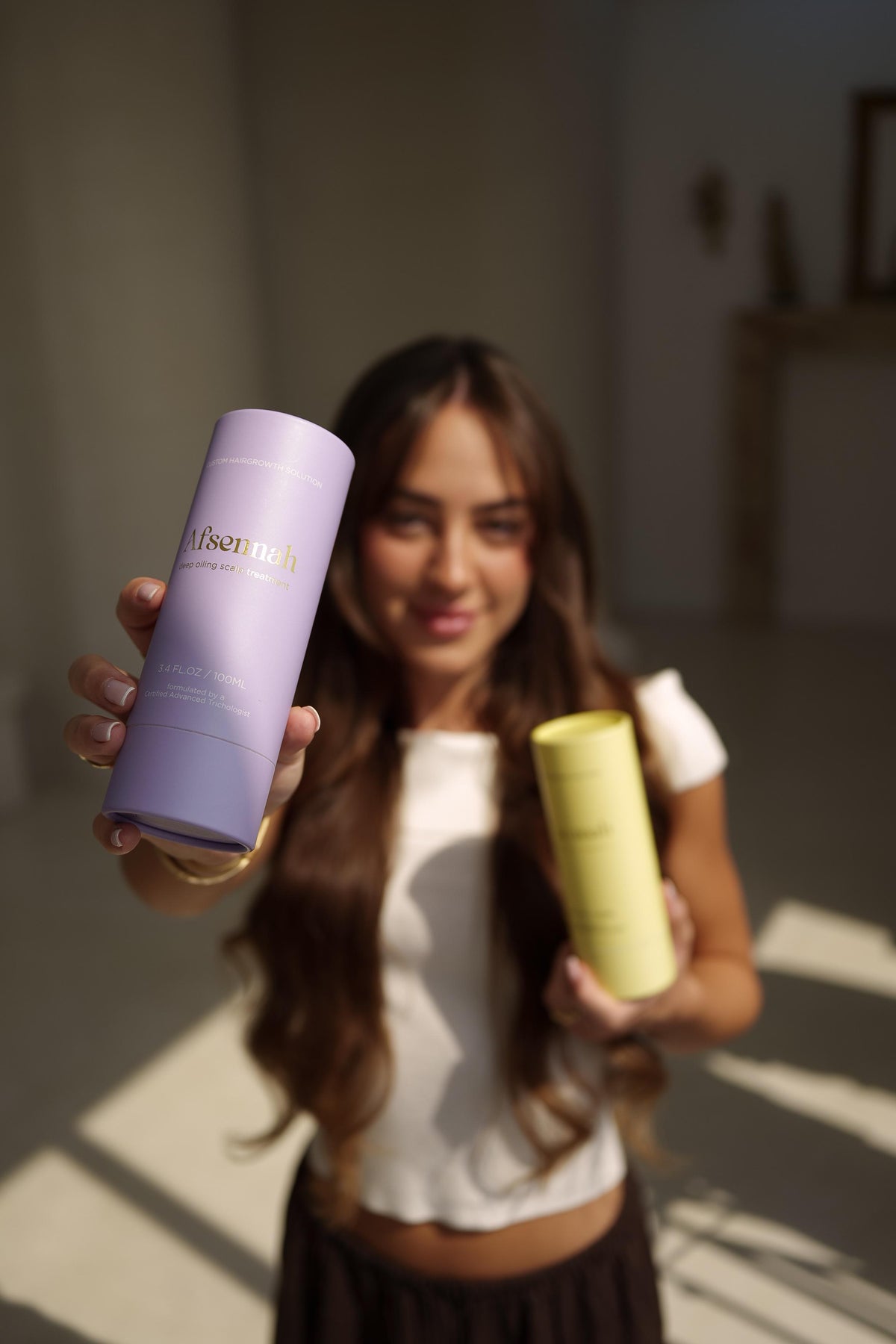
Give your scalp 5 minutes of massage a day, and start deep oiling, which is my favorite treatment. Deep oiling means scalp oil on your scalp and hair oil on your lengths, left on for at least 4 hours before you wash, or overnight. Here's the order:
- Roll your clean scalp with the Microneedle Scalp Roller, 1 to 2 times a week.
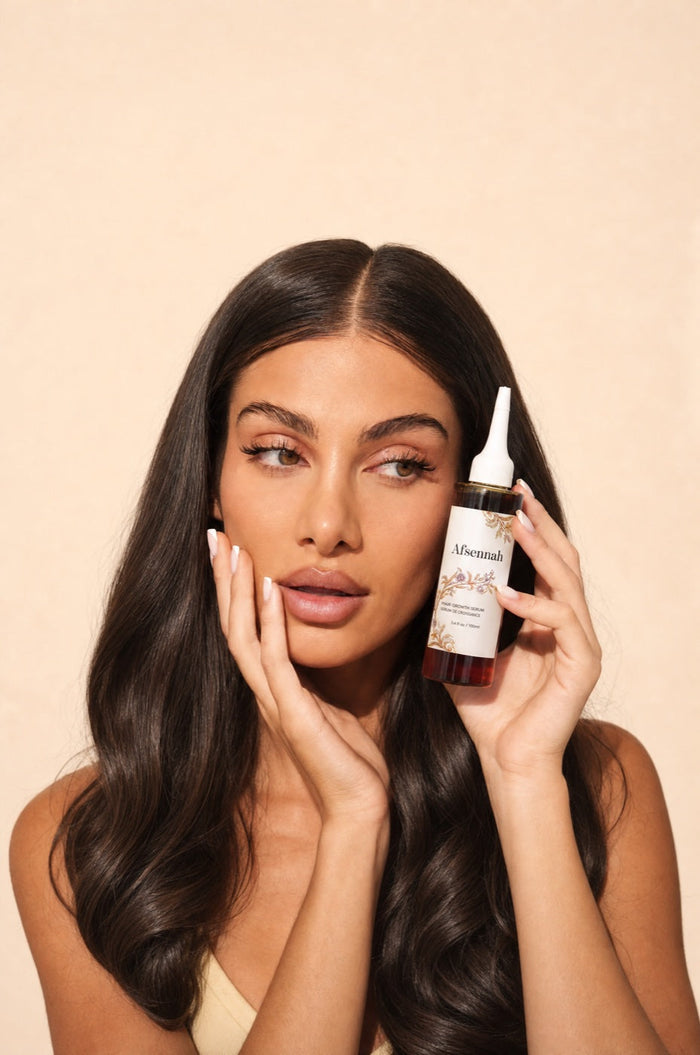
- Apply the Custom Hair Growth Treatment to your scalp, 2 to 3 times a week.
- Smooth the Custom Hair Care Treatment over your lengths and ends.
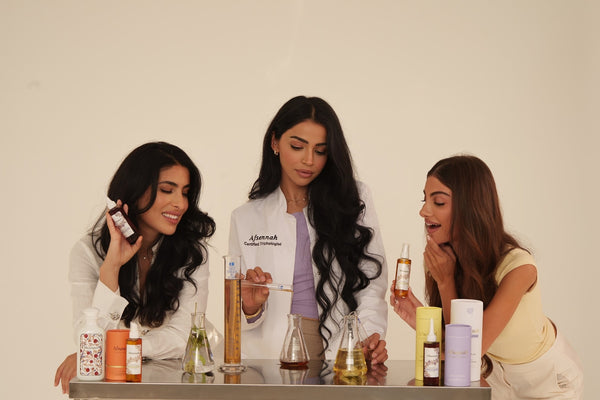
Why custom? Different causes need different ingredients. Hormone-driven thinning like PCOS calls for DHT blockers, while stress shedding needs stress-relieving support. I blend your formula to your cause.
5Be Gentle With Your Hair
Thinner hair breaks more easily, so protect what you have. Skip tight ponytails, swap rough elastics for the Silk Scrunchies Set, and use low heat.

6Track It With Photos
Take a photo of your part in the same light once a month. Hair grows about 1 cm a month, so day-to-day mirror checks will only stress you out. First improvements usually show after 8 to 12 weeks, with more visible results after 3 to 6 months.
Read nextHow to Reactivate Hair Follicles: What Works (and What's Hype) →
The Best Afsennah Products for PCOS Hair Loss

Custom Hair Growth Treatment
The pre-wash scalp oil, blended for hormone-driven thinning when PCOS is your cause.
Shop now
Hair Growth Set
The scalp oil and the roller together, so you can start deep oiling right away.
Shop nowFrequently Asked Questions
What does PCOS hair loss look like?
Usually a wider part and thinner hair on top and at the crown, while the front hairline stays mostly in place. The hairs that grow back are often finer and shorter than before.
Does PCOS hair loss grow back?
Hair that is only shedding can grow back once the cause is managed. Follicles that have been shrinking for years respond more slowly, so starting early with your doctor and a scalp routine gives you the best chance to keep and thicken what you have.
Do supplements help PCOS hair loss?
Only if you're actually low in something, like iron or vitamin D. A blood test tells you. No supplement replaces getting the hormones looked at by your doctor.
What should I do first for PCOS hair loss?
See your doctor for hormone and blood tests, then start a gentle scalp routine at the same time. You don't have to wait for one before starting the other.
“The cause decides the treatment.”
Afsennah, Certified Advanced Trichologist
The Takeaway
With PCOS hair loss, the hormones lead and your hair follows. Get the hormones checked, then give your scalp steady support.
Ready to start? Order your Custom Hair Growth Treatment or the Hair Growth Set, tick PCOS in the consultation you receive by email, and I'll blend your formula for your cause. It comes with my 180-day guarantee.
Lots of love,
Afsennah
And don't forget to follow me for more hair tips
More From Afsennah
About the author
Afsennah, Certified Advanced Trichologist
Afsennah is a Certified Advanced Trichologist and the founder of Afsennah, a custom haircare brand. After dealing with androgenetic alopecia, alopecia areata and scalp eczema from a young age, she began studying the scalp and ingredients to understand her own hair. Read her story.
This article is for general education and does not replace medical advice.
Sources
- Androgenetic alopecia in polycystic ovary syndrome, Endocrine Connections (2026)
- The Hormonal Background of Hair Loss in Non-Scarring Alopecias, Biomedicines (2024)
- Polycystic Ovary Syndrome (PCOS), Eunice Kennedy Shriver National Institute of Child Health and Human Development
- Female pattern hair loss: A clinical, pathophysiologic, and therapeutic review, International Journal of Women's Dermatology (2018)
- Standardized scalp massage results in increased hair thickness, Eplasty (2016)