Menopause Hair Loss: Thinning, Dryness and What Helps
In this story ·
By Afsennah, Certified Advanced Trichologist · Published July 10, 2026
Hot flashes, you expected. Sleepless nights, fine. But nobody warned you that your hair would get thinner, drier and suddenly frizzy in places it never was. Your ponytail feels like half of what it used to be.
Menopause hair loss is real, it's common, and it is not your fault. Your hormones changed the rules. Let's catch up on the new ones together.
Key Takeaways
- ✓As estrogen drops, androgens have more influence on your follicles, so hair can thin on top.
- ✓Menopause also makes hair drier, finer and duller, because your scalp makes less oil.
- ✓Shedding from stress or low iron often joins in, so get your blood work checked.
- ✓Genetic thinning can be slowed and supported, not cured. Starting early helps.
- ✓First changes take 8 to 12 weeks, more visible results 3 to 6 months.
The short answer
Menopause hair loss happens because estrogen and progesterone drop, which gives androgens more influence on your hair follicles. Hair on top and at the part slowly gets thinner and finer, and lengths get drier. See your doctor to rule out thyroid and iron problems, then support your scalp with massage and deep oiling.
Why Does Menopause Cause Hair Loss?
Estrogen was protecting your growing phase
Estrogen helps keep hairs in their growing phase longer. Think of pregnancy, when many women have their thickest hair ever. As estrogen drops in perimenopause and menopause, that protection fades.
Androgens get a louder voice
Women make small amounts of androgens too. When estrogen drops, the balance shifts and androgens have more say. In follicles that are genetically sensitive, DHT makes the follicle smaller over time (fancy name: miniaturization). Each new hair grows back a little finer.
In my trichology training, this is exactly where female pattern hair loss often shows up: if there's no other hormone problem, genetic thinning in women often starts around menopause because of this shift in the hormone ratio.
Life adds its own drama
Menopause usually arrives in a busy, stressful decade. Poor sleep, stress, illness and heavier periods in perimenopause (hello, low iron) can all trigger extra shedding on top of the slow thinning.
Read nextThinning Hair in Women: The Truth About Causes and What Actually Helps →
What Menopause Hair Loss Looks Like
- A wider part and more scalp showing on top and at the crown.
- A thinner ponytail, even though you don't see big clumps.
- Finer, shorter hairs that never seem to grow as long as they used to.
- Thinning at the temples, in some women.
- More shedding in the brush and drain during stressful months.
Not sure if you're shedding or thinning? Shedding means more hairs fall out. Thinning means the hairs that grow back are finer. Many women in menopause have a bit of both.
Read nextFemale Pattern Hair Loss: Early Signs Most Women Miss →
Not Just Thinner: Why Hair Gets Dry and Frizzy
Here's the plot twist nobody talks about: menopause changes your hair's texture too. Your scalp makes less oil, so your lengths get less natural conditioning. Hair can feel drier, rougher and duller, and gray hairs often feel coarser and wirier.
That also means your old routine might suddenly feel wrong. The strong shampoo you loved for your oily twenties may now be too much for a drier scalp.
Trichologist tip
In my consultation, I ask about your scalp type (condition), your Hair Density and your Hair Condition, like Dry & Dull or Thinning, and whether you have a hormonal imbalance. In menopause, those answers often change at the same time. That's exactly why I don't believe in one "menopause shampoo" for everyone. A dry, thinning scalp and an oily, thinning scalp need different blends.
When to See a Doctor
See your doctor or a dermatologist if your hair is shedding a lot, if your part is getting wider quickly, or if you have other symptoms like extreme tiredness or weight changes. Ask for blood tests for thyroid, iron and ferritin, vitamin D and B12, because thyroid problems and low iron are common at this age and cause shedding too. Some women discuss hormone therapy with their doctor. That's a medical decision with its own pros and cons, so make it together with them. See a doctor quickly for round bald patches or a red, painful or scarring scalp.
Menopause Hair Loss Treatment: Your Routine, Step by Step
1Rule Out the Other Causes
The cause decides the treatment. If low iron or your thyroid is part of the story, fixing that first gives your scalp a fair chance.
2Switch to a Gentler Wash
Your scalp is probably drier than it used to be. Use a Custom Shampoo blended for your scalp type now, not ten years ago. Put some in your hand with a little water and emulsify it, so it spreads better on your scalp while you massage it in. Then use the Custom Conditioner on your lengths, every wash.

Afsennah pick
Custom Shampoo
Made for your scalp type. Free from sulfates, parabens, silicones and alcohols.
Shop now3Let's Activate the Hair Follicles
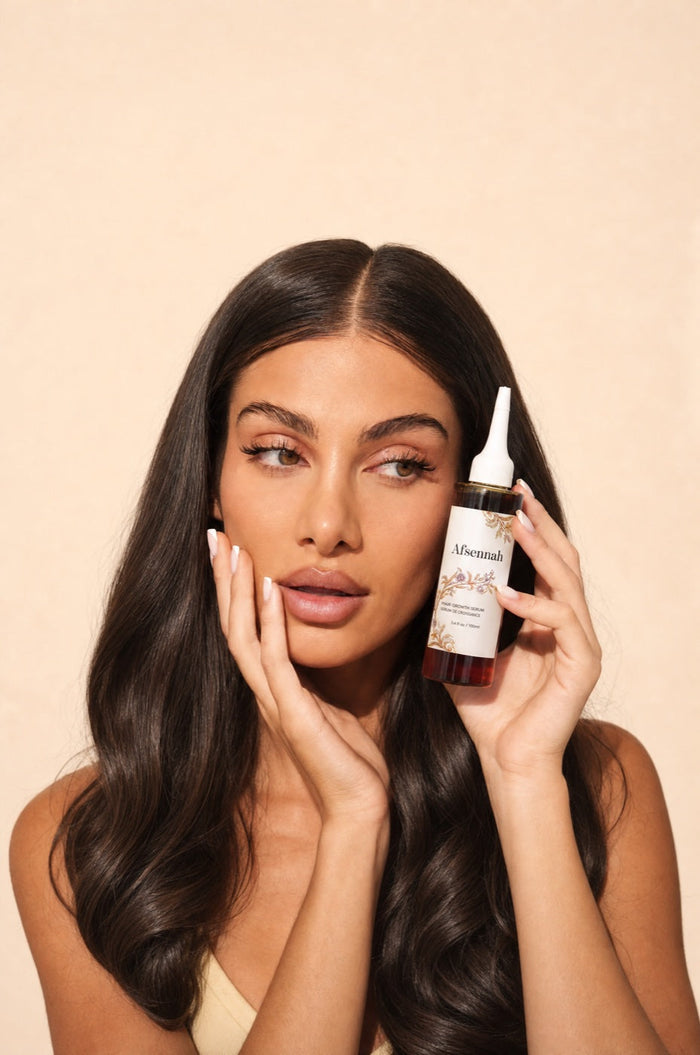
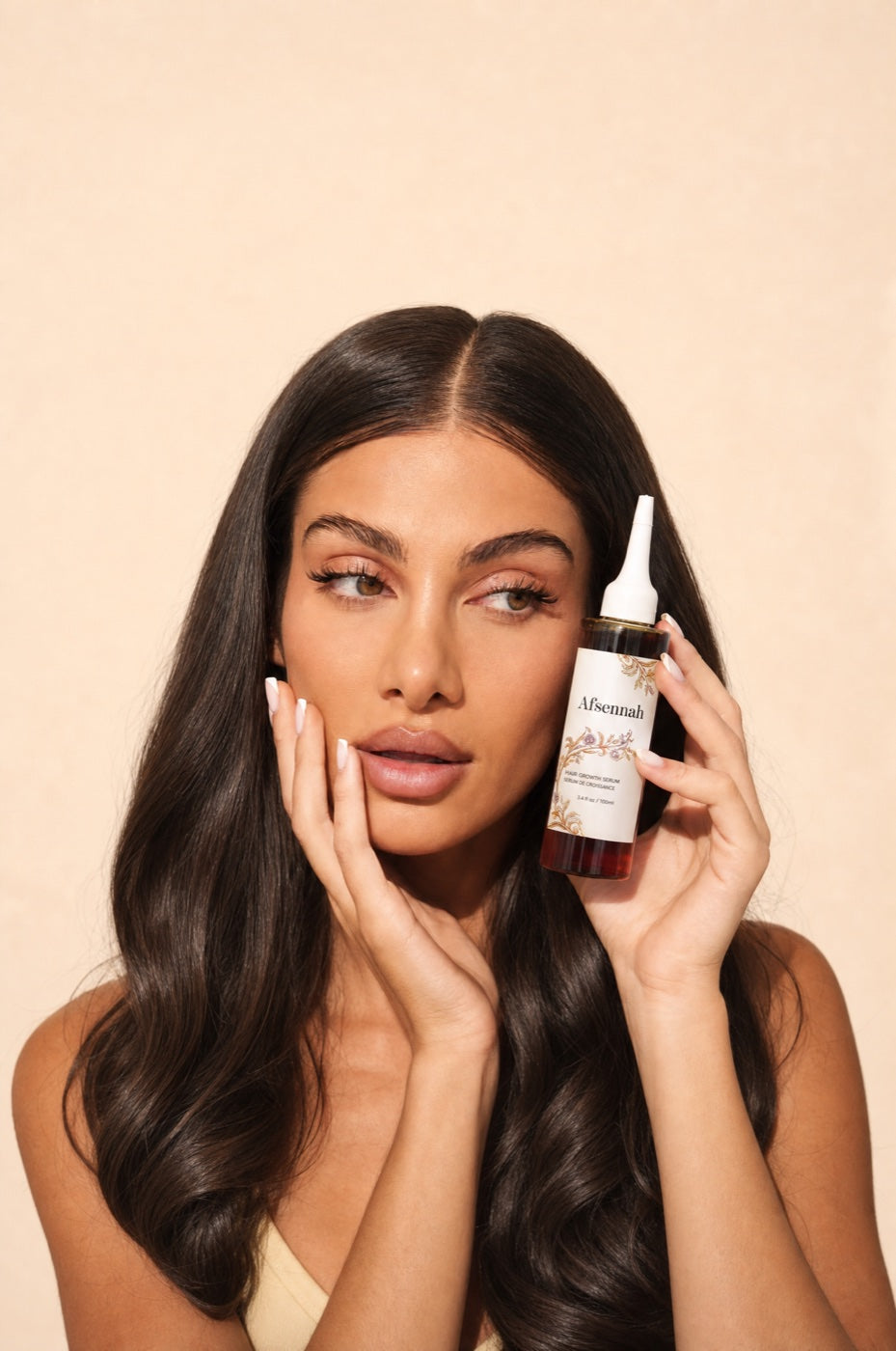
The hair follicles need a little wake-up call. Massage your scalp for 5 minutes a day, and start deep oiling, which is my favorite treatment. That's scalp oil on your scalp and hair oil on your lengths, on for at least 4 hours before washing or overnight. First roll your clean scalp with the Microneedle Scalp Roller, 1 to 2 times a week. Then apply the Custom Hair Growth Treatment to your scalp and the Custom Hair Care Treatment to your lengths, 2 to 3 times a week.

Why custom? Different causes need different ingredients. Thinning linked to hormones needs DHT blockers, while stress shedding needs stress-relieving support. I blend your formula to your cause.
4Keep Your Lengths Soft
Drier hair breaks faster, and every broken hair makes thinning look worse. A few drops of the Custom Hair Elixir on damp ends keeps them soft and less frizzy between washes.

Afsennah pick
Custom Hair Elixir
Lightweight daily leave-in that keeps your ends soft and protected.
Shop now5Be Gentle Day and Night
Use low heat, loose styles and the Silk Scrunchies Set instead of tight elastics. A Silk Pillowcase helps cut friction on fragile hair while you sleep, especially on those restless nights.
6Be Patient and Take Photos
Take a photo of your part once a month in the same light. First improvements usually show after 8 to 12 weeks, with more visible results after 3 to 6 months.
Read nextHow to Use a Scalp Roller for Hair Growth (Without Overdoing It) →
The Best Afsennah Products for Menopause Hair Loss


Frequently Asked Questions
Does menopause hair loss grow back?
Shedding from stress, illness or low iron usually grows back once the cause is fixed. Genetic thinning can't be cured, but it can be slowed and supported, and starting early helps you keep more of your hair.
What is the best treatment for menopause hair loss?
There's no single best one, because the cause differs per woman. Start with your doctor to rule out thyroid and iron problems, then support your scalp with massage and deep oiling, and a routine matched to your scalp type.
What shampoo is best for menopause hair loss?
A gentle shampoo that fits your scalp type right now. Many women need something milder than before, because the scalp gets drier after menopause.
Do supplements help menopause hair loss?
Only if a blood test shows you're low in something, like iron or vitamin D. Test first, then supplement with your doctor's advice.
“The cause decides the treatment.”
Afsennah, Certified Advanced Trichologist
The Takeaway
Menopause changes your hair's rules, not your chances. Check the medical causes, update your routine to the scalp you have now, and support your follicles early.
Ready to start? Order your Custom Hair Growth Treatment or the Hair Growth Set, fill in the consultation you receive by email, and I'll blend your formula for your cause. It comes with my 180-day guarantee.
Lots of love,
Afsennah
And don't forget to follow me for more hair tips
More From Afsennah
About the author
Afsennah, Certified Advanced Trichologist
Afsennah is a Certified Advanced Trichologist and the founder of Afsennah, a custom haircare brand. After dealing with androgenetic alopecia, alopecia areata and scalp eczema from a young age, she began studying the scalp and ingredients to understand her own hair. Read her story.
This article is for general education and does not replace medical advice.
Sources
- Menopause, skin and common dermatoses. Part 1: hair disorders, Clinical and Experimental Dermatology (2022)
- Alterations in hair follicle dynamics in women, BioMed Research International (2013)
- Female pattern hair loss: A clinical, pathophysiologic, and therapeutic review, International Journal of Women's Dermatology (2018)
- Standardized scalp massage results in increased hair thickness, Eplasty (2016)